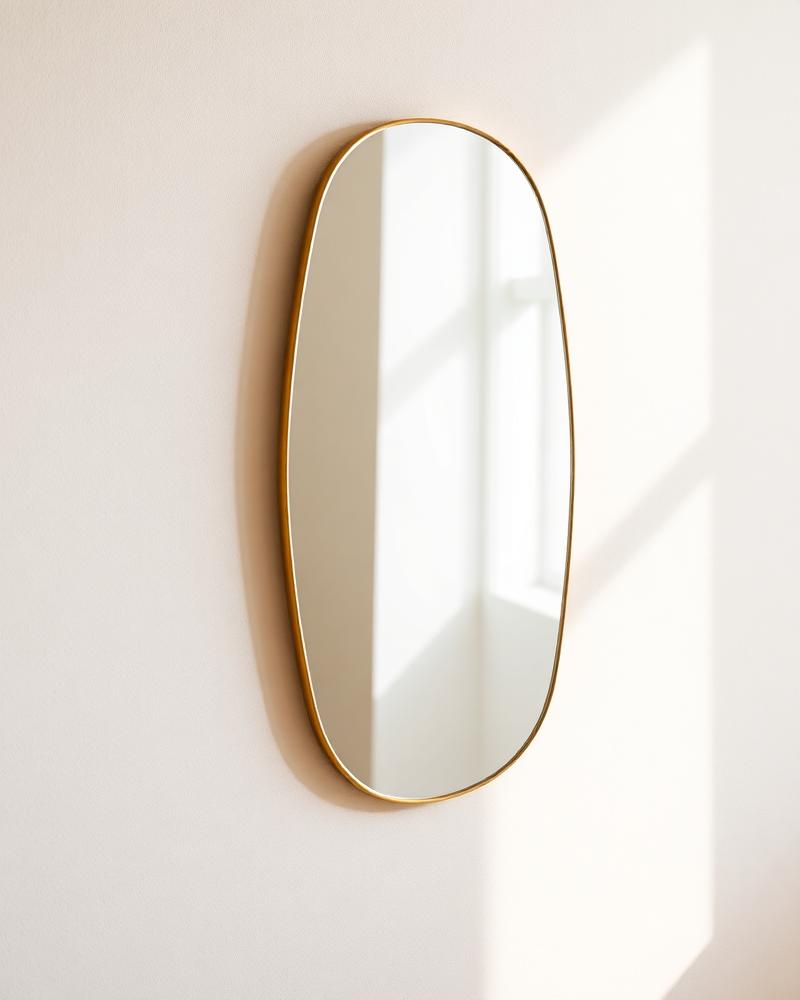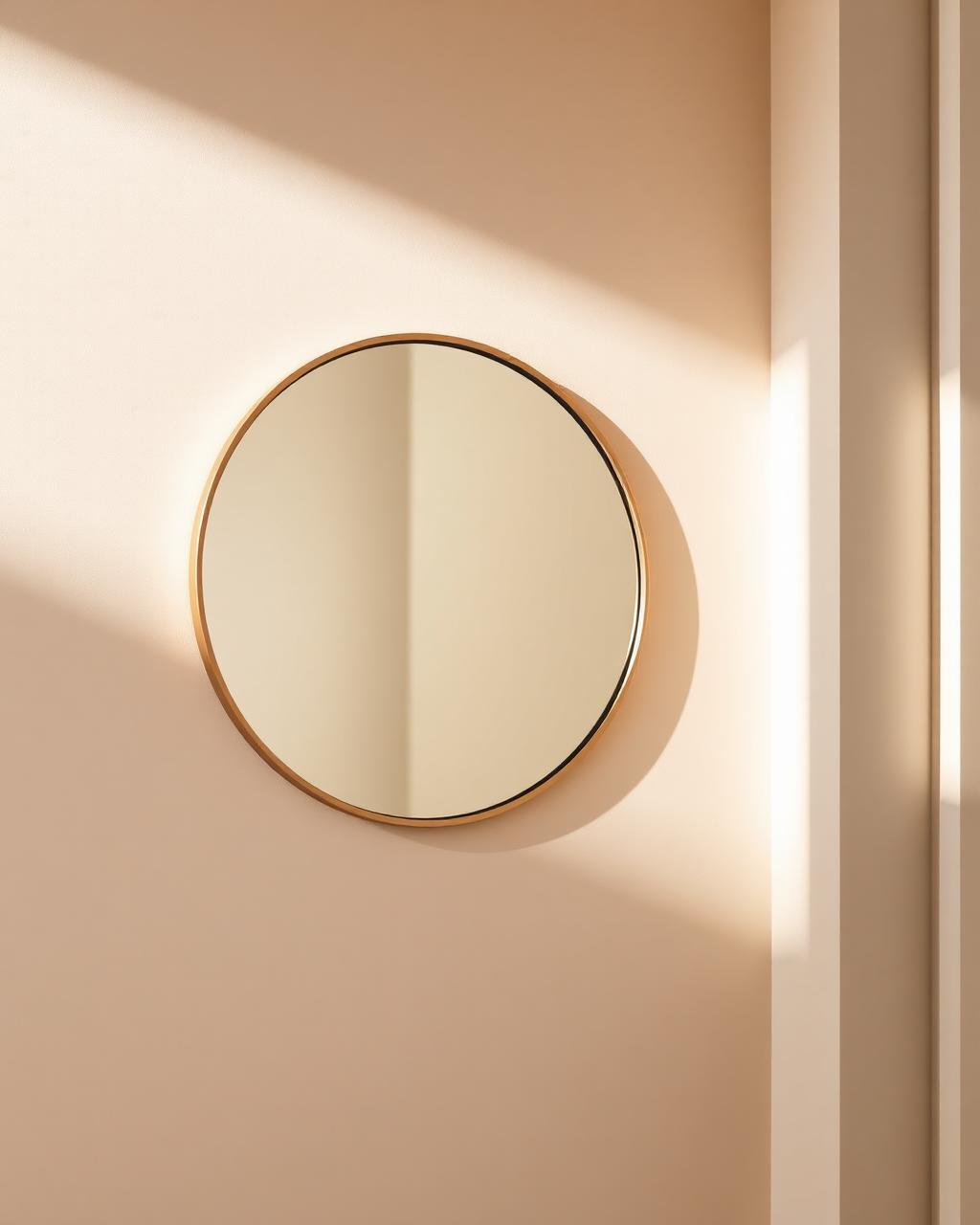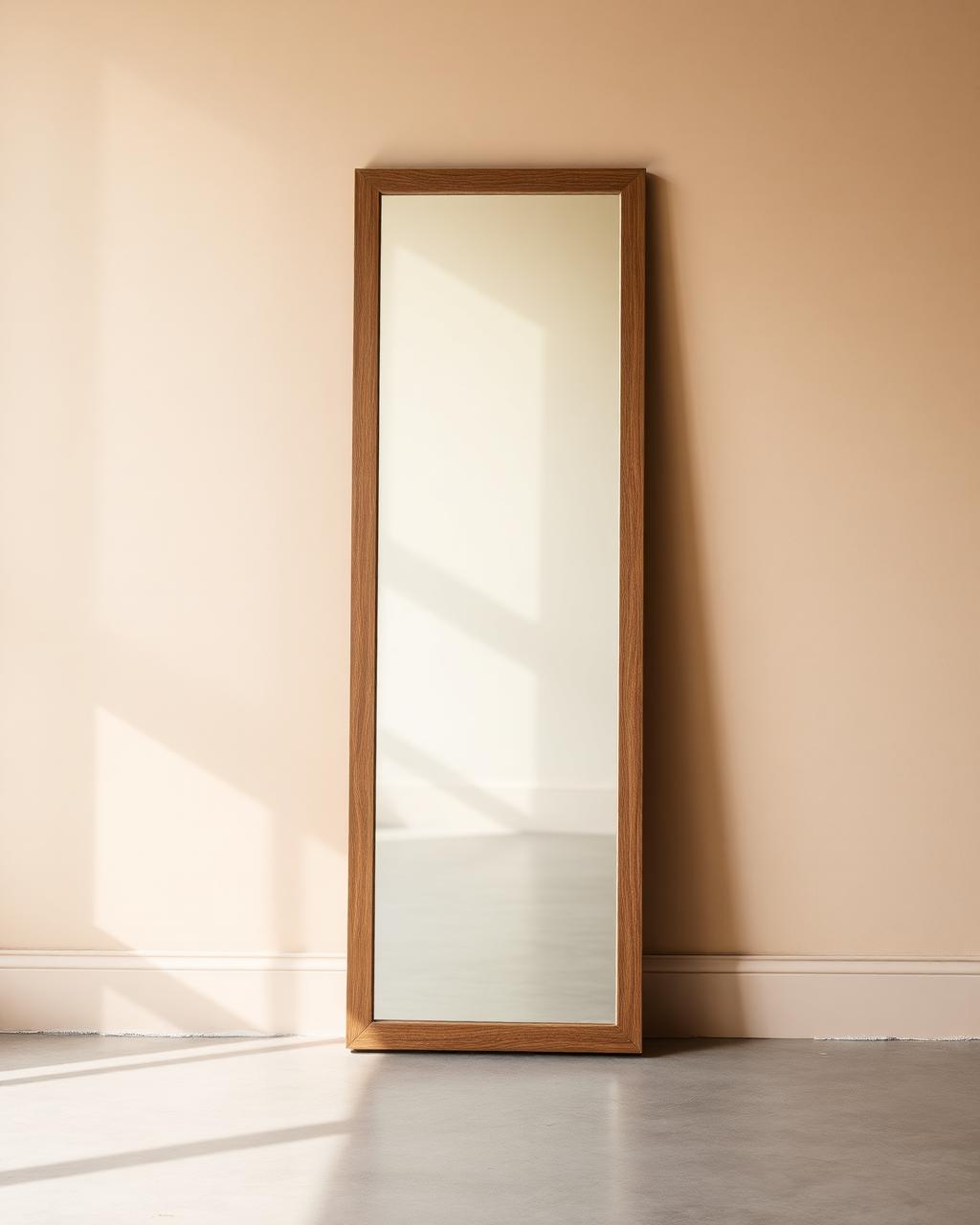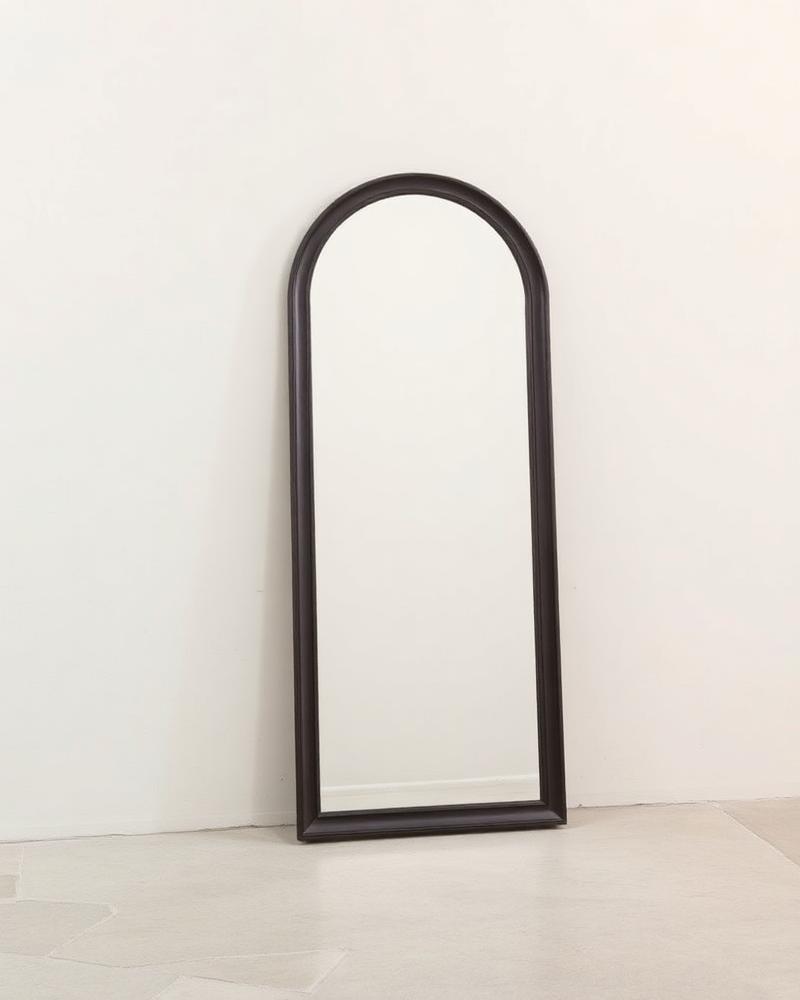
Selene
Oversized Arch Mirror
$1,290
from $108/mo
Sizing Tools
Selecting the correct mirror dimensions transforms a functional surface into considered architecture. Mirror sizing follows measurable principles rooted in proportion, sightlines, and the relationship between reflective surface and surrounding elements. This guide provides the specific measurements, height requirements, and width ratios that inform every placement decision, from powder room vanities to mantelpiece compositions. Understanding these rules ensures mirrors serve both optical function and spatial balance.
Recommended
34–41in wide
70–85 percent of the furniture width
Above a vanity, match the basin rather than the whole counter, and centre the glass on the tap. Hang the bottom edge 5 to 10 inches above the backsplash.
Quick Answer
Most mirrors should span 60 to 80 percent of the furniture width beneath them. Vanity mirrors typically sit 5 to 10 inches narrower than the vanity itself. Hang mirrors with their center at 57 to 65 inches from the floor. Full-length mirrors require a minimum height of 48 inches, though 65 inches better accommodates most adults without tilting.
Editorial guide
6 min read · Mont Rose Design Studio
01
This foundational ratio governs the relationship between a mirror and the furniture it crowns. A mirror should measure 60 to 80 percent of the width of the console, dresser, or vanity below it. A 48-inch console, for instance, calls for a mirror between 29 and 38 inches wide. This proportion maintains visual weight without overwhelming the composition or appearing timid within the vertical plane.
The rule applies across contexts but flexes slightly depending on frame prominence and surrounding architecture. Heavily ornamented frames often perform best at the narrower end of the range, while frameless or minimal profiles can approach 80 percent without dominating. When flanking a mirror with sconces or artwork, stay closer to 60 percent to preserve breathing room within the total arrangement.
02
Bathroom mirrors above single vanities should sit 4 to 8 inches narrower than the vanity width, centering over the sink. A standard 36-inch vanity pairs with a mirror between 28 and 32 inches wide. Double vanity installations benefit from either one large mirror spanning both sinks or two individual mirrors, each sized to its respective sink with 4 to 6 inches of clearance from the vanity edge and any neighboring mirror.
Vertical dimension depends on available wall height and ceiling clearance. Position the bottom edge 4 to 6 inches above the backsplash or faucet, then extend upward, leaving at least 6 inches below the ceiling or light fixture. Most single vanity mirrors range from 24 to 36 inches tall. For detailed measurement protocols and style considerations, refer to our complete Bathroom Mirror Size Guide and browse proportioned options within Bathroom Mirrors.
03
Mirrors above console tables in entryways or hallways require careful attention to both width and height. Apply the 60 to 80 percent width rule, then consider the console height itself. Standard console tables stand 30 to 36 inches tall. The mirror should begin 4 to 8 inches above the console surface, leaving space for lamps, vessels, or organic arrangements without visual collision.
Vertical mirrors in narrow entryways benefit from added height to expand perceived space and improve sightlines. A 40 to 50 inch tall mirror above a 32-inch console creates elegant proportion in most residential ceiling heights. Explore our curated Wall Mirrors to see how frame profile and aspect ratio shift spatial perception even when overall dimensions remain constant.
04
A mirror above a fireplace mantel should measure two-thirds to three-quarters the width of the mantel shelf or firebox opening, whichever reads as the dominant horizontal. For a 60-inch mantel, this yields a mirror between 40 and 45 inches wide. Centering remains essential, as asymmetry above a fireplace disrupts the architectural anchor of the room.
Height varies with ceiling clearance and mantel depth. Position the bottom edge 3 to 6 inches above any mantel objects, allowing the composition to breathe. Tall rooms accommodate vertical mirrors or arched forms that draw the eye upward; our Arch Mirrors offer proportions particularly suited to fireplace installations. In rooms with lower ceilings, horizontal or square mirrors prevent top-heaviness.
05
A functional full-length mirror must be at least 48 inches tall to reflect head to mid-thigh for most adults. However, a height of 65 inches or greater provides a complete, untilted reflection for individuals up to six feet tall. Width typically ranges from 18 to 24 inches for leaning or wall-mounted styles, though wider profiles suit dressing areas where multiple viewing angles matter.
Mount or lean full-length mirrors with the bottom edge 6 to 12 inches above the floor to protect the lower frame and mirror edge from kicks and vacuum contact. Wall-mounted installations should place the top edge at approximately 72 to 78 inches, aligning the reflective center with average adult eye level when standing. View scaled examples and installation details within Full Length Mirrors.
06
Mirrors functioning primarily as decorative elements rather than utilitarian reflectors follow looser dimensional rules but still respect scale and sightline. Gallery walls incorporating mirrors should treat each piece as art, with 2 to 4 inches of space between frames. Solo decorative mirrors on large blank walls perform best when they occupy one-quarter to one-third of the wall width to avoid appearing lost.
Hanging height for decorative mirrors defaults to the 57-inch center rule used in galleries, placing the visual center at average standing eye level. In dining rooms or above sofas, this may shift upward to 60 to 65 inches to account for seated sightlines and furniture height. Our Complete Guide Mirror Sizes Every Room walks through room-specific approaches to decorative mirror integration.
07
The most frequent error is undersizing, particularly in large rooms or above substantial furniture. A 24-inch mirror above a 60-inch console violates proportion and appears tentative. Conversely, oversized mirrors that extend beyond furniture edges or crowd adjacent architecture create visual chaos and negate the frame as a compositional boundary.
Hanging mirrors too high ranks as the second most common misstep. When the bottom edge sits above eye level, the mirror loses functional utility and floats without anchor. Similarly, neglecting the relationship between mirror width and frame thickness distorts perceived size; a 30-inch mirror with a 4-inch frame occupies 38 inches of wall width, a distinction that matters in tight placements or symmetrical arrangements.
A mirror over a 36-inch vanity should measure between 28 and 32 inches wide, leaving 4 to 8 inches of total clearance to prevent the mirror from appearing wider than its base. Center the mirror over the sink, and position the bottom edge 4 to 6 inches above the faucet or backsplash. Vertical height typically ranges from 24 to 36 inches depending on ceiling clearance and lighting placement.
No. A mirror should be narrower than the furniture beneath it, typically 60 to 80 percent of the furniture width. Matching widths exactly creates a rigid, visually heavy column that lacks the nuance and breathing room essential to balanced composition. The furniture should always read as the base, with the mirror as a lighter, elevated element that respects but does not mimic the proportions below.
Hang mirrors with their center point at 57 to 65 inches from the floor, aligning the middle of the reflective surface with average adult eye level when standing. In spaces where viewers are typically seated, such as dining rooms, adjust the center height to 60 to 65 inches. Above furniture, ensure the bottom edge sits 4 to 8 inches above the surface to allow for layered styling and visual separation.
A mirror above a fireplace should span two-thirds to three-quarters the width of the mantel or firebox opening, whichever is visually dominant. For a 60-inch mantel, choose a mirror between 40 and 45 inches wide. Position the bottom edge 3 to 6 inches above the mantel surface, leaving room for candlesticks or seasonal arrangements while maintaining clean visual proportion within the chimney breast.
A full-length mirror should be at least 48 inches tall to reflect a partial standing view, but 65 inches or taller is preferable for a complete, untilted reflection for adults up to six feet tall. Width typically ranges from 18 to 24 inches. Mount or lean the mirror with the bottom edge 6 to 12 inches above the floor and the top edge at 72 to 78 inches to center the reflection at standing eye level.
Keep reading