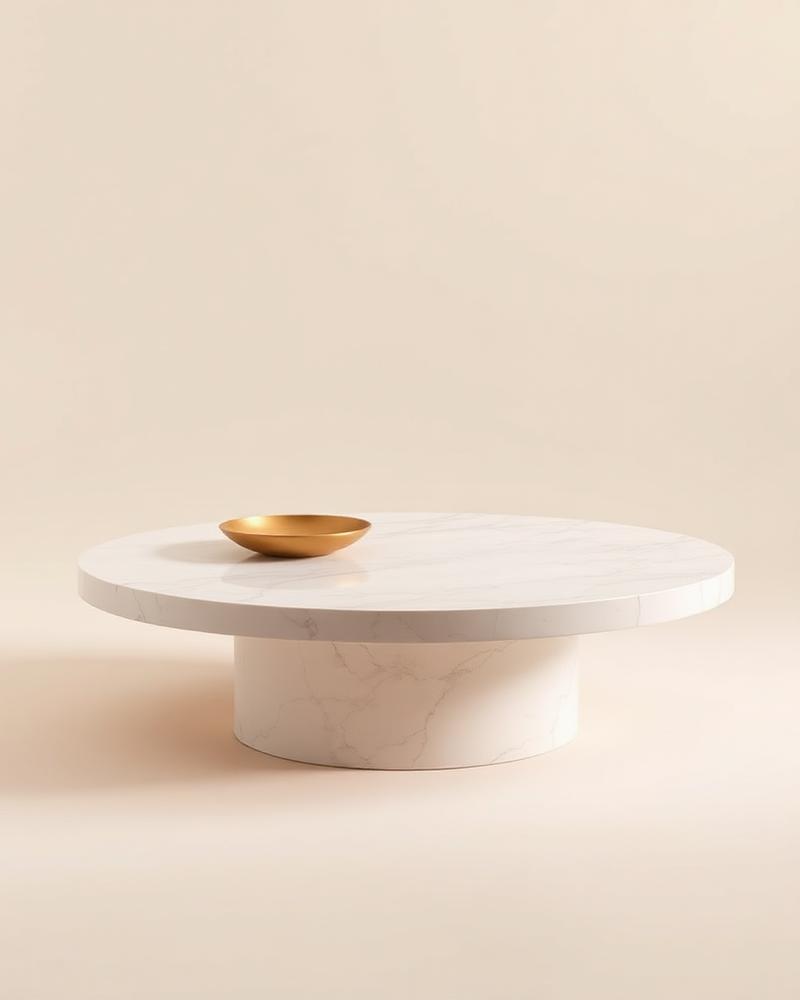
Carrara
Marble Coffee Table
$1,890
from $158/mo
Limited availability
Sizing Tools
Selecting the correct coffee table size transforms a living room from provisional to purposeful. The piece must anchor seating without obstructing movement, balance visual weight without dominating sightlines, and serve daily rituals from morning correspondence to evening entertainment. Yet most miscalculations stem not from aesthetic misjudgment but from imprecise measurement. The guidelines below translate proportional relationships into specific dimensions, ensuring your selection from our /furniture/coffee-tables collection serves both form and function with equal competence.
Recommended
56in x 21in
Two thirds of an 84in sofa
Keep the top 1 to 2 inches below the sofa seat so the surface reads level with the cushions, and never let the table run longer than the sofa itself.
Quick Answer
Your coffee table should span two-thirds the length of your sofa, sit one to two inches below seat cushion height, and maintain fourteen to eighteen inches of clearance from the seating edge. For an average sofa of eighty-four inches, specify a table between fifty-two and sixty inches long, positioned to allow unimpeded passage while keeping necessary objects within comfortable reach.
Editorial guide
6 min read · Mont Rose Design Studio
01
The foundational principle governing coffee table length establishes that the table should measure approximately two-thirds the length of the sofa it faces. For a standard ninety-inch sofa, this yields a table of sixty inches. For a more compact seventy-two-inch loveseat, forty-eight inches proves appropriate. This ratio prevents the table from appearing either lost beneath the sofa's span or asserting disproportionate visual weight.
The rule flexes slightly based on room configuration and additional seating. In arrangements featuring flanking chairs or a sectional, you may reduce the table to three-fifths of the primary sofa length to accommodate sightlines. Conversely, in open-plan environments where the sofa floats away from walls, a table reaching toward three-quarters length anchors the composition more decisively. Our Living Room Coffee Tables offer scaled options across this spectrum.
02
Coffee table height should align one to two inches below the sofa's seat cushion surface. Standard sofa seat height ranges from seventeen to nineteen inches, positioning ideal table height between fifteen and eighteen inches. This differential allows occupants to set down glassware or retrieve books without awkward reaching while maintaining clean horizontal planes across the seating group.
Measure your existing seating with cushions compressed as they would be under a seated person, not in their plumped, unoccupied state. The distinction often spans two inches. Should your seating include a low-slung mid-century piece at sixteen inches, select a fourteen or fifteen-inch table. Conversely, English roll-arm sofas with seat heights of twenty inches pair better with eighteen-inch tables. Precision here prevents the subtle postural strain that accumulates over years of daily use.
03
Maintain fourteen to eighteen inches between the table edge and the sofa front. Fourteen inches represents the minimum for comfortable leg extension and passage; eighteen inches provides generous clearance for rooms with frequent cross-traffic. Measure from the point where the seat cushion meets the frame, not from any protruding base or skirt detail.
In compact rooms where space constrains every dimension, err toward sixteen inches rather than sacrificing table surface area. A table reduced to inadequate size serves poorly, while slightly tighter clearance becomes imperceptible once occupants adjust their approach paths. For detailed guidance on balancing these competing demands, consult our article at How To Choose Perfect Coffee Table, which addresses proportion within constrained footprints.
04
Sectional sofas and small rooms each present distinct geometric challenges. L-shaped sectionals benefit from square or round tables that relate to the configuration's inside corner rather than attempting to span one leg of the arrangement. A forty-eight-inch round table, for instance, serves a sectional far more effectively than a rectangular form that privileges one seating zone over another.
In narrow living rooms where passage occurs along the sofa's length, oval tables provide greater surface area than round profiles while eliminating the sharp corners that constrict circulation. Our Round Coffee Tables include both circular and elliptical forms engineered to these specific scenarios. For particularly tight quarters, consider nesting tables or a single slender console table at thirty inches wide, accepting reduced surface in exchange for preserved movement.
05
A coffee table's material influences its perceived size independent of actual dimensions. A sixty-inch table in glass-topped steel reads lighter than the same dimension executed in solid walnut, allowing the transparent version to succeed in tighter arrangements. Conversely, rooms with high ceilings and substantial upholstery require the anchoring presence of stone or dense hardwood.
Our Marble Coffee Tables demonstrate how material density concentrates visual weight, making a fifty-four-inch marble table register with comparable presence to a sixty-six-inch wood alternative. In rooms where you've calculated dimensions at the smaller end of recommended ranges, specify materials with physical heft. Where you've maximized table size within available clearance, transparent or light-toned materials prevent the piece from dominating. Avoid common material mismatches detailed at Coffee Table Styling Mistakes.
06
Dimensional guidelines provide necessary structure, but lived patterns warrant equal consideration. Households that regularly host gather-round conversation require generous surface area and might extend length to three-quarters of the sofa span. Those who prefer minimal tabletop presence can reduce to three-fifths without functional penalty, provided side tables supplement drink and book storage.
Before finalizing dimensions, template the proposed footprint with painter's tape on your floor. Live with the marked area for several days, noting where you instinctively step, where you wish surface area extended or retracted, and whether the proportions feel resolved from your typical sightlines. This exercise reveals idiosyncrasies no formula captures, allowing you to adjust specifications before commissioning a piece from Coffee Tables that will serve decades of daily life.
07
For sofas of seventy-two inches, specify tables between forty-eight and fifty-four inches long. Eighty-inch sofas pair with fifty-three to sixty-inch tables. The common eighty-four-inch sofa accommodates fifty-six to sixty-three-inch tables most successfully, while ninety-six-inch sofas call for sixty-four to seventy-two-inch proportions. These ranges assume standard depth sofas of thirty-six to forty inches; deeper seating tolerates proportionally larger tables.
Record your sofa's length, depth, and seat height before browsing. Arrive at preliminary dimensions using the two-thirds guideline, then adjust based on room width, typical traffic patterns, and whether you trend toward maximal surface utility or preserved openness. The objective remains a table that disappears into daily function, never announcing itself through miscalibrated scale yet always present when needed.
An eighty-four-inch sofa pairs most successfully with a coffee table measuring fifty-six to sixty-three inches in length, adhering to the two-thirds proportion guideline. Select fifty-six inches for tighter rooms or where additional seating requires preserved sightlines, sixty inches for balanced standard arrangements, and sixty-three inches in open plans where the sofa floats away from walls. Maintain table height one to two inches below the seat cushions and preserve fourteen to eighteen inches of clearance from the sofa's front edge.
Coffee table height should measure one to two inches below your sofa's compressed seat cushion height. With standard sofas ranging from seventeen to nineteen inches at the seat, this positions most tables between fifteen and eighteen inches tall. Measure cushions as they compress under seated weight rather than in their unoccupied state. Lower mid-century seating at sixteen inches requires fourteen or fifteen-inch tables, while traditional English styles at twenty inches pair better with eighteen-inch heights for comfortable reach and cohesive horizontal lines.
Position your coffee table fourteen to eighteen inches from the sofa's front edge, measured from where the seat cushion meets the frame. Fourteen inches represents functional minimum clearance for leg extension and passage; eighteen inches accommodates generous traffic flow in active rooms. Sixteen inches proves optimal for most residential settings, balancing comfortable reach with adequate circulation. In compact spaces, maintain this clearance rather than sacrificing table surface area, as slightly reduced passage becomes imperceptible while an undersized table hampers utility permanently.
A coffee table should not exceed the sofa's length; doing so creates disproportionate visual weight and disrupts the seating group's balance. The table may approach the sofa's width in depth, particularly with deep seating of forty inches or more, but length should remain at two-thirds the sofa span as a maximum guideline. In arrangements with substantial flanking chairs or where the coffee table serves multiple seating pieces simultaneously, you might extend to three-quarters length, but never surpass the primary sofa's dimension.
Small living rooms benefit most from round or oval coffee tables that eliminate protruding corners and ease circulation in constrained passages. A forty-two to forty-eight-inch round table provides substantial surface while its curved perimeter reduces visual mass compared to rectangular equivalents. Oval forms offer additional length for serving while maintaining rounded ends that facilitate movement. In particularly narrow rooms, consider a single console-width table of thirty inches or nesting tables that contract when full surface area isn't required, preserving passage without eliminating function entirely.
Keep reading