Alpina
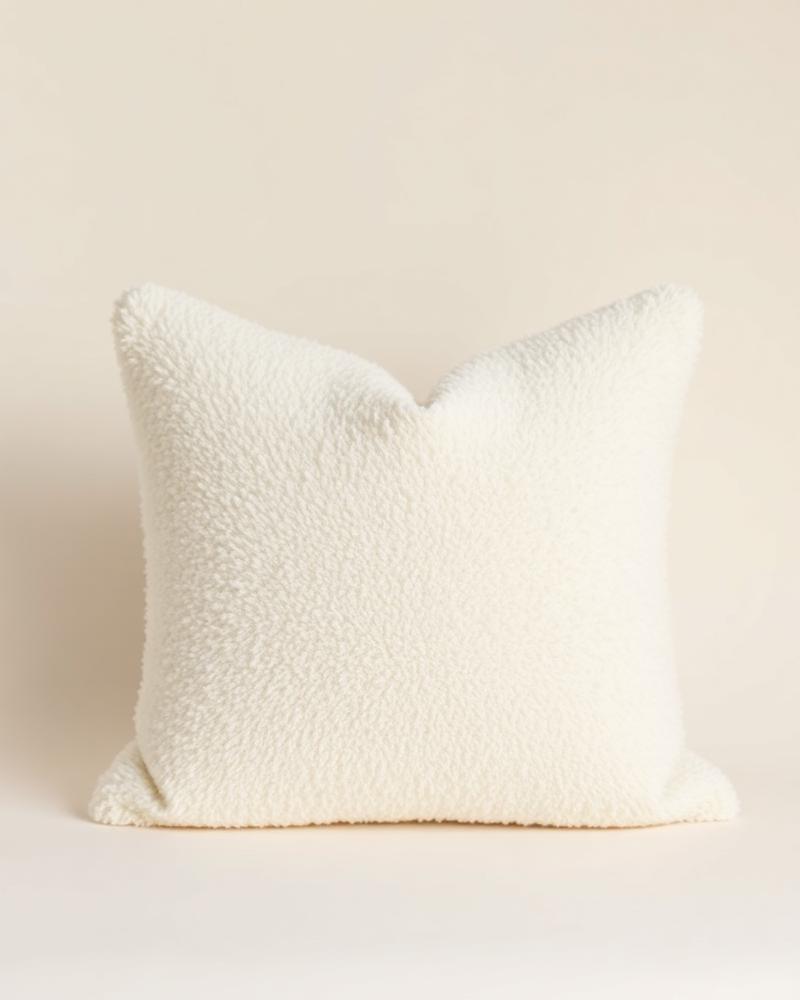
Bouclé Throw Pillow
$120
from $10/mo
Dimension Guide
Quick Answer
Most living rooms need an 8 x 10 or 9 x 12 rug; most queen bedrooms need an 8 x 10 and kings a 9 x 12. Leave 18 to 24 inches of bare floor between the rug edge and the wall, and add 24 inches beyond a dining table on every side.
| Size | Area | Best for |
|---|---|---|
| 5ft x 8ft | 40 sq ft | Small living rooms, under a queen bed's lower half, bedside runners |
| 6ft x 9ft | 54 sq ft | Apartment living rooms, home offices |
| 8ft x 10ft | 80 sq ft | Standard living rooms, queen bedrooms, 4 to 6 seat dining |
| 9ft x 12ft | 108 sq ft | Large living rooms, king bedrooms, 6 to 8 seat dining |
| 10ft x 14ft | 140 sq ft | Open-plan living, oversized seating groups |
Work from the furniture, not the floor. In a living room the rug should reach at least under the front legs of every seat in the group; better still, it should sit under all of the seating with the sofa fully on the pile. Anything smaller leaves the arrangement floating and makes the room read as though the rug was bought first and the furniture second.
Then check the perimeter. A rug should stop 18 to 24 inches short of the walls in an average room, and no closer than 8 inches in a small one. That bare margin is what makes the rug read as a deliberate island rather than as failed wall-to-wall carpet.
Bedrooms: centre the rug under the bed with 24 to 36 inches showing on both sides and at the foot. A queen usually needs an 8 x 10, a king a 9 x 12. If budget is tight, two runners either side of the bed do the same job for bare feet.
Dining rooms: measure the table, then add 24 inches on every side so chairs stay on the pile when pulled out. Choose a flat weave rather than pile. Entryways and kitchens: flat-woven runners only, sized to stop short of any door swing.
Layering solves two problems at once: it makes a small rug work in a large room and adds texture where a scheme is flat. Use a large jute or sisal as the base and a smaller wool, vintage or patterned rug on top, offset rather than centred, with at least 12 inches of base showing on the sides you can see.
Round rugs suit round tables, square entry halls and reading corners; runners suit corridors, galley kitchens and bedsides. Rectangular remains the default because most furniture arrangements are rectangular, and a rug fights the furniture whenever the geometry disagrees.
Interactive Tool
Prefer to work from your own measurements? Use the Rug Size Calculator for an instant recommendation.