Isola
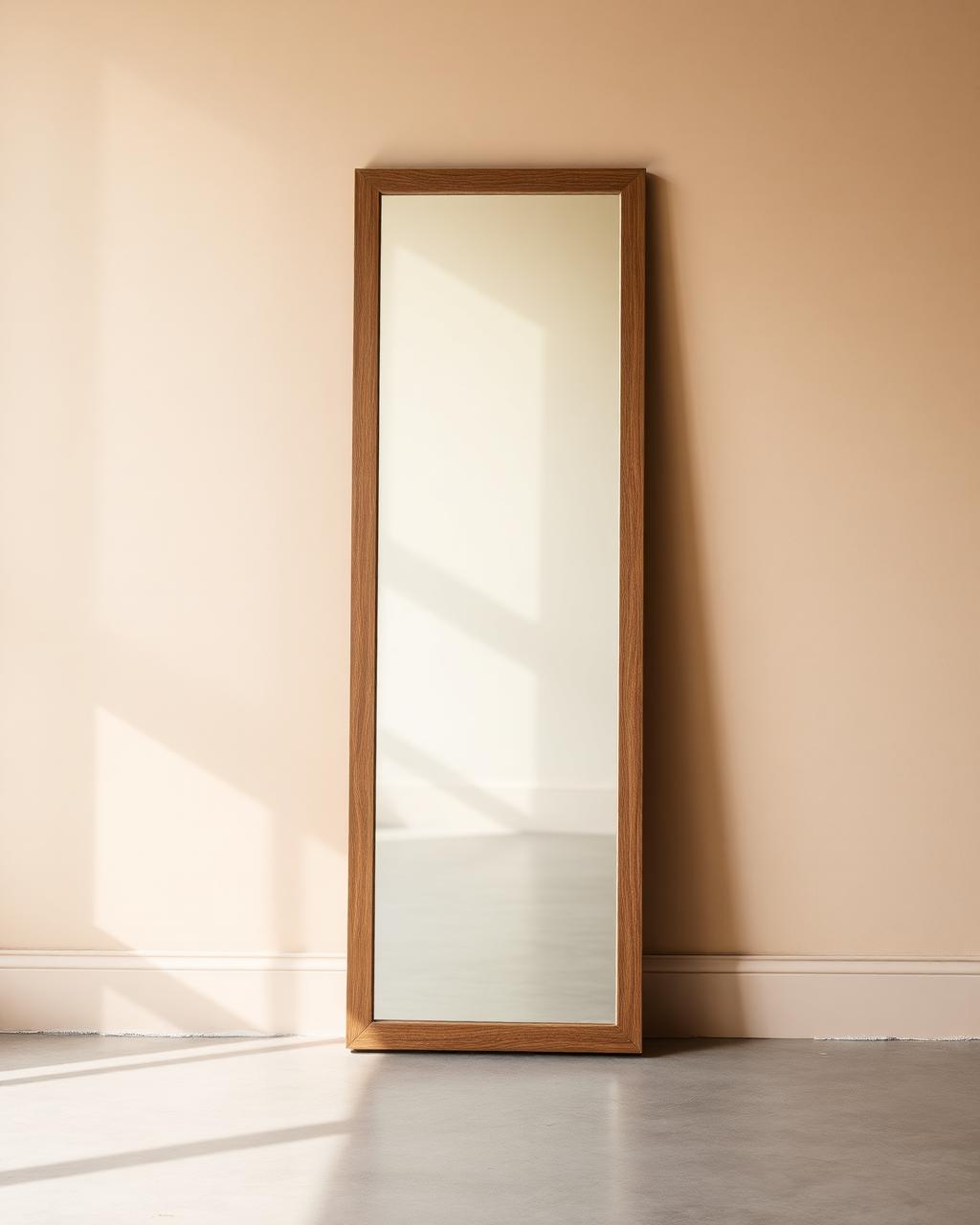
Full Length Floor Mirror
$890
from $74/mo

Material Guide
Oak has framed European buildings and furniture for a thousand years because it is dense, stable when properly dried, and rich in tannins that resist rot and insects. The pale, open-grained oak that defines contemporary interiors is usually white oak, quarter-sawn or rift-sawn to control movement and to show the flecked medullary rays that give the timber its character.
White oak is tighter-grained and more water-resistant than red oak, which is why it dominates furniture and flooring. Cut determines figure: plain-sawn shows cathedral grain, quarter-sawn shows straight lines with ray fleck, rift-sawn is the calmest of all. Fumed oak is darkened with ammonia to react with the tannins; smoked and charred oak go further still.
Oak is the most forgiving hardwood in a room because it is tonally neutral. It carries linen, wool, plaster, stone and brass equally well. Keep finishes consistent — a matte oiled oak beside a lacquered oak reads as two woods rather than one. In small rooms, pale oak buys visual space; in dark rooms, fumed oak stops the timber going flat.
Oiled oak wants re-oiling once or twice a year and is repairable in place: sand the mark, re-oil the panel. Lacquered oak resists spills better but cannot be spot-repaired. Keep oak out of direct afternoon sun, which bleaches unevenly, and use felt pads under anything ceramic or metal.