Palazzo
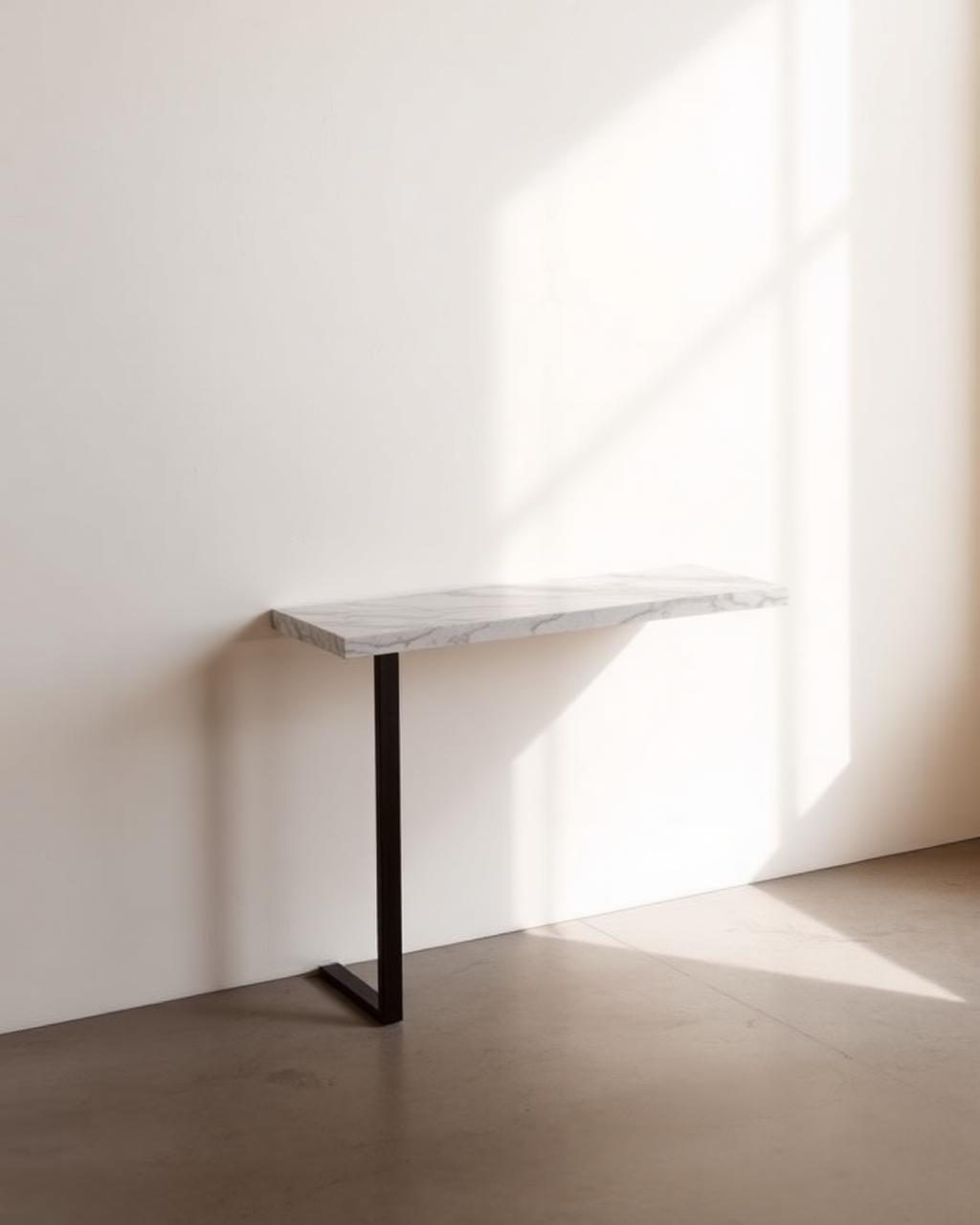
Marble Console Table
$1,650
from $138/mo
Sizing Tools
Selecting the right dining table begins with understanding the relationship between room dimensions, seating capacity, and circulation space. A table that crowds a room or seats too few diminishes both function and comfort. The calculator above provides immediate sizing recommendations based on your specific parameters. What follows is the methodology behind those numbers: the clearances, per-person measurements, and geometric principles that determine whether a table will work in your space.
Recommended
48in x 38in
Seats 6 at 24in per person
Rectangular tables gain two seats at the heads; round tables seat in a circle, so the diameter follows people multiplied by 24 inches and divided by pi.
Quick Answer
Allocate 24 inches of table edge per person for comfortable seating. Ensure 36 to 42 inches of clearance on all sides for chair movement and passage. Room dimensions ultimately cap table size: subtract clearance from length and width to find your maximum footprint, then select a shape and seating count that fits within those bounds.
Editorial guide
6 min read · Mont Rose Design Studio
01
Each diner requires a minimum of 24 inches of table edge to sit and eat comfortably. This measurement accounts for shoulder width, elbow room, and place setting span. Reduce this distance and guests begin to compete for space. Increase it to 30 inches and the experience becomes notably more generous, appropriate for formal dining or larger place settings.
Rectangular tables apply this rule along their long sides. A 72-inch table seats three people per side, totaling six when you include the ends. Round tables distribute the perimeter continuously: a 60-inch diameter yields roughly 188 inches of circumference, dividing neatly into seating for eight. Oval tables combine both logics, offering longer perimeters than rounds of equivalent length while maintaining the softer profile.
When comparing silhouettes across our Round Dining Tables and Modern Dining Tables, note that rounds sacrifice some seating efficiency in exchange for sightlines and flow. A 72-inch round seats eight; a 72-by-42-inch rectangle seats eight as well, but occupies less floor area in one dimension.
02
Clearance is the unobstructed zone surrounding the table, necessary for pulling out chairs and walking past seated diners. The minimum is 36 inches. This allows a person to push back a chair and rise without colliding with walls, sideboards, or other furniture. In practice, 36 inches feels tight if the space sees frequent service or simultaneous seating.
Forty-two inches is the preferred standard. It permits passage behind occupied chairs without requiring guests to tuck in or shift. In formal dining rooms where a sideboard or console might stand against the wall, plan for this wider clearance on the serving side. Our guidance in Dining Room Sideboard Styling assumes this 42-inch buffer to maintain both visual balance and practical access.
Measure from the table edge to the nearest obstacle: wall, window trim, radiator, or piece of furniture such as those in our Console Tables collection. If your room is 12 feet wide, subtract 42 inches from each side (84 inches total, or 7 feet), leaving a maximum table width of 5 feet or 60 inches.
03
Room dimensions impose a hard ceiling on table dimensions. Begin by measuring the room in inches. Subtract the clearance envelope—36 to 42 inches per side—from both length and width. The resulting rectangle defines your maximum table footprint.
A 10-by-12-foot room translates to 120 by 144 inches. Subtracting 42 inches per side yields a maximum table size of 36 by 60 inches. Within that footprint, a 36-by-60-inch rectangular table seats six comfortably, or a 48-inch round seats five to six. Attempt a larger table and circulation collapses.
This constraint applies regardless of aesthetic ambition. A room cannot accommodate a table it cannot surround with adequate clearance. Before considering style, finish, or leg design, confirm the physical envelope. The examples shown throughout our Dining Room pages reflect this sizing discipline.
04
Rectangular tables offer the highest seating density in a given footprint. Their straight edges align with architecture, and their ends can accept additional guests when needed. A 96-by-42-inch rectangle seats eight to ten, and its linear form suits long, narrow rooms.
Round tables eliminate corners, improving flow and conversation. However, diameter grows quickly relative to seating: moving from six to eight diners requires increasing diameter from 48 inches to 60 inches, adding substantial floor area. Rounds work best in square rooms or open-plan layouts where clearance exists on all sides.
Oval tables split the difference. They provide the intimacy and sightlines of a round while fitting more naturally into rectangular rooms. A 72-by-42-inch oval seats six to eight and requires less clearance at the ends than a rectangle of equal length. For layouts and styling approaches, refer to our Trestle Dining Table Decorating article, which addresses both rectangular and oval forms.
05
A 48-inch round seats four to five. A 60-inch round seats six to eight. A 72-inch round seats eight to ten. These are firm guidelines derived from the 24-inch-per-person rule applied to circumference.
Rectangular tables follow a simpler progression. A 60-inch table seats six, a 72-inch seats six to eight, an 84-inch seats eight, and a 96-inch seats eight to ten. Width matters less for seating count but significantly impacts comfort: a 36-inch width feels narrow, while 42 to 48 inches allows for centerpieces and serving pieces without crowding place settings.
Oval tables mirror rectangular counts when length and width are comparable. A 72-by-42-inch oval seats six to eight. An 84-by-44-inch oval seats eight to ten. Always verify that your chosen dimensions preserve the required clearance envelope within your specific room.
06
Extension leaves add seating capacity for occasional use without permanently consuming floor space. A 60-inch table that extends to 78 or 84 inches can grow from six seats to eight or ten. Confirm that the extended length still maintains 36 to 42 inches of clearance. A table that fits when closed may overwhelm the room when open.
Self-storing leaves hide within the table base. Removable leaves require storage elsewhere, often in a closet or against a wall. Account for the fully extended footprint during your initial measurement process, not just the closed dimensions.
Flexibility comes at a cost in structural mass and visual line. Tables with leaves include mechanical hardware and seams. If you host large gatherings infrequently, consider whether a smaller fixed table supplemented by alternative seating arrangements better suits your needs and aesthetic.
07
Leg position affects usable seating. Corner legs on rectangular tables interfere least with chairs. Apron-mounted or trestle bases can obstruct knee space at the ends, reducing effective seating by one or two positions. Pedestal bases on rounds and ovals maximize legroom but require sufficient diameter for stability.
Measure leg or base width at its widest point, typically where it meets the floor. Ensure this footprint does not extend into your clearance zone. A wide tripod base on a 54-inch round may add six inches of radius, effectively increasing the clearance requirement.
Material thickness and edge profile also matter at the margins. A two-inch-thick top with a pronounced bevel occupies more visual and physical space than a thin parsons-style edge. These details refine comfort and proportion once the fundamental dimensions are resolved.
A rectangular table measuring 60 to 72 inches in length and 36 to 42 inches in width comfortably seats six, with three diners per long side. A round table with a 48 to 54-inch diameter also accommodates six, though the round configuration requires more floor area. An oval table of 66 by 42 inches seats six with good clearance at the ends.
Maintain a minimum of 36 inches of clearance between the table edge and any wall, furniture, or obstacle. This distance allows diners to pull out chairs and sit down. For comfortable passage behind seated guests or to accommodate serving pieces along the wall, increase clearance to 42 inches. Measure from the table edge to the nearest obstruction on all sides.
Rectangular tables typically fit better in small rooms because their straight edges align with walls and maximize usable floor area. A round table requires clearance on all sides and consumes more space relative to seating capacity. However, if the room is nearly square and traffic flows around the table rather than along its sides, a round table can improve circulation by eliminating corners.
Allocate 24 inches of table edge per person for comfortable seating. This measurement provides adequate shoulder width, elbow room, and space for a full place setting. Increasing the allowance to 30 inches enhances comfort, particularly for formal dining with larger chargers and multiple utensils. Falling below 24 inches results in crowding and diminished comfort for guests.
A 10-by-12-foot room measures 120 by 144 inches. Subtracting 42 inches of clearance from each side leaves a maximum table footprint of 36 by 60 inches. Within this envelope, a rectangular table up to 36 by 60 inches seats six, or a round table up to 48 inches in diameter seats four to six. Larger tables will compromise necessary clearance for chairs and movement.
Keep reading