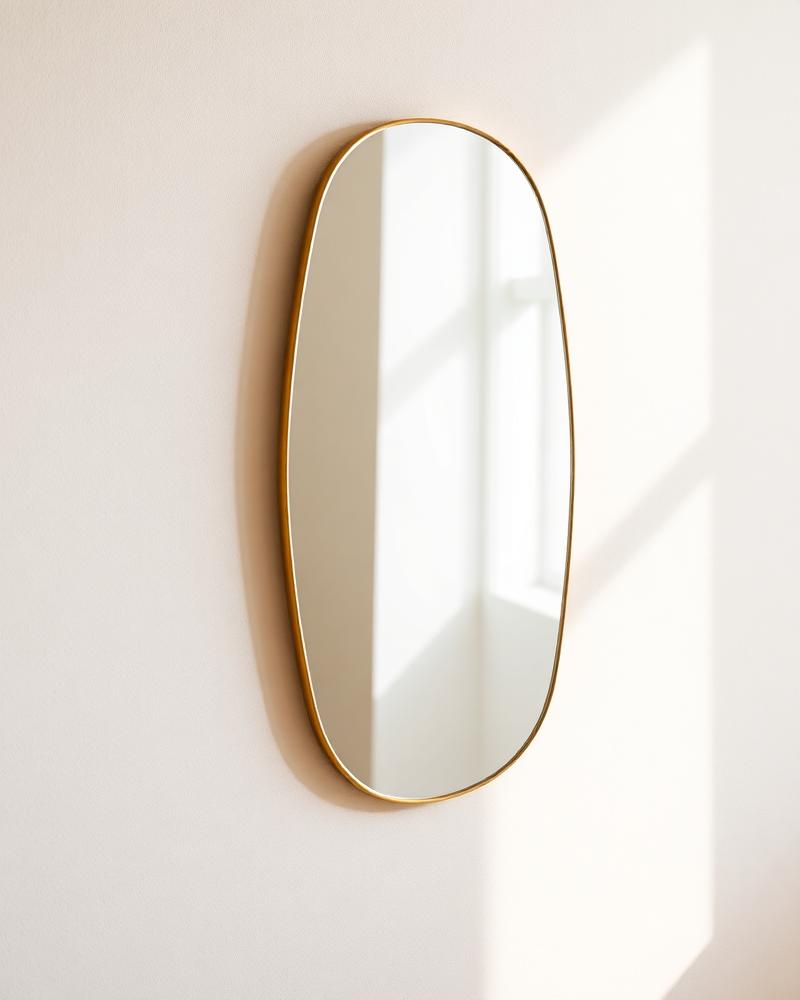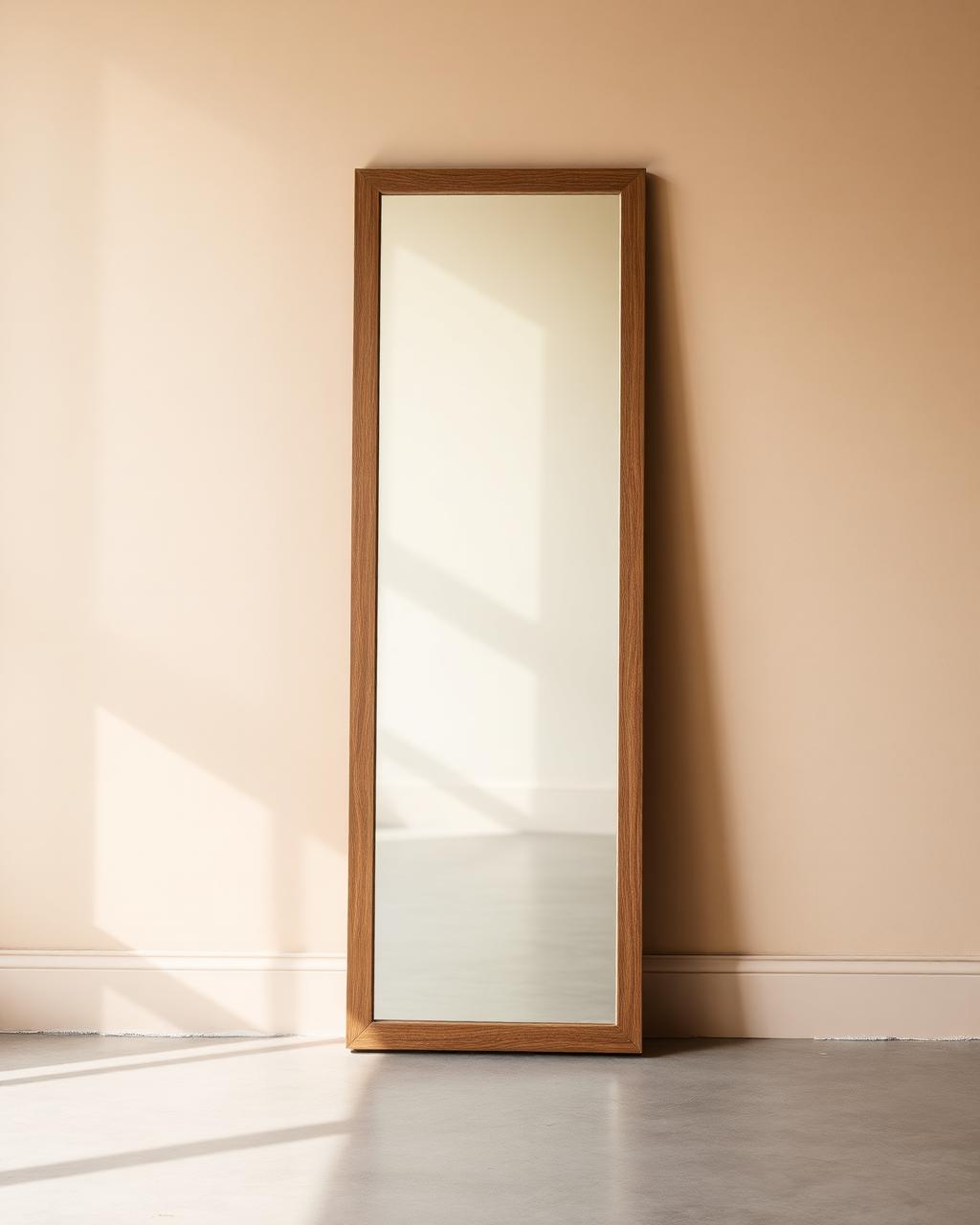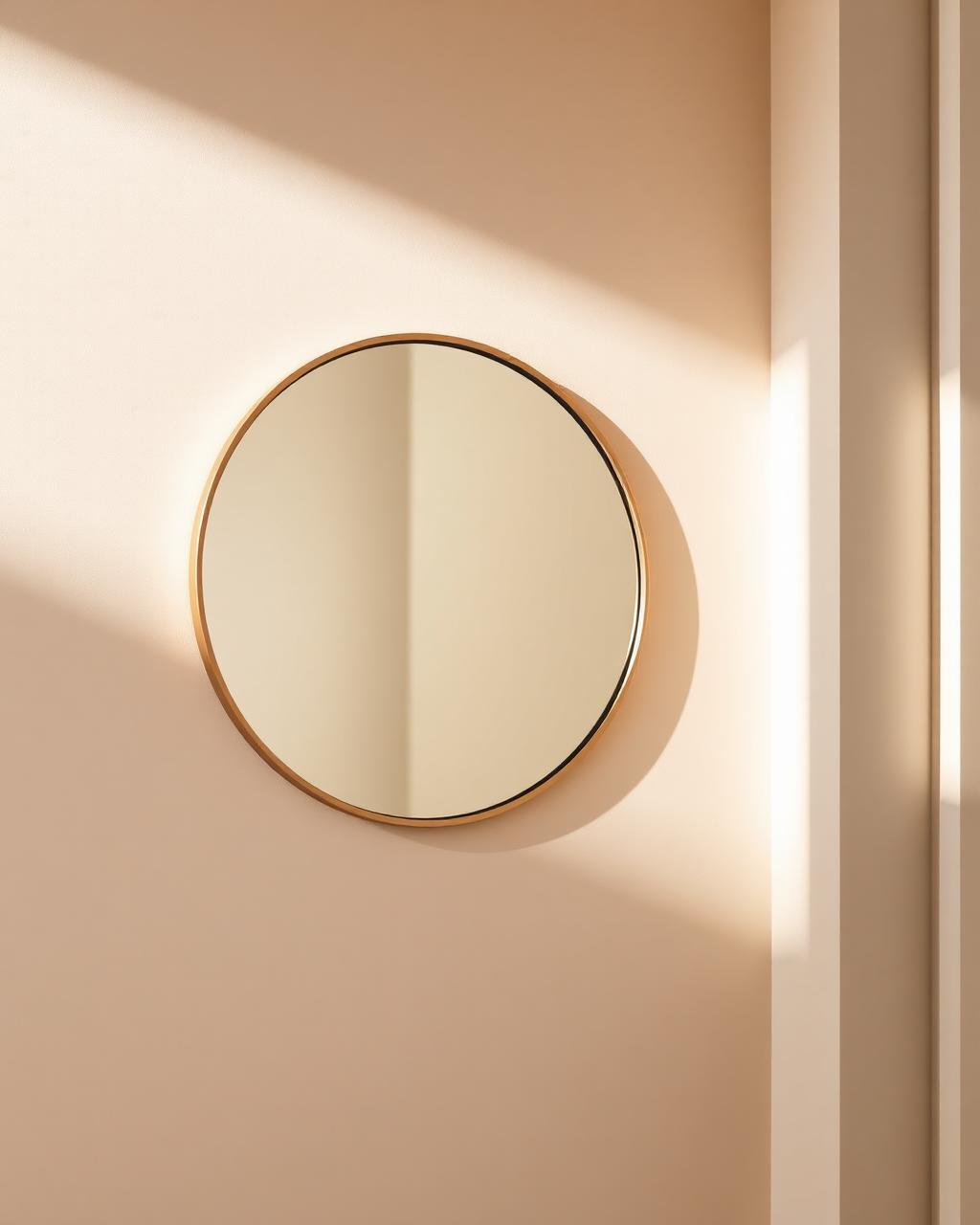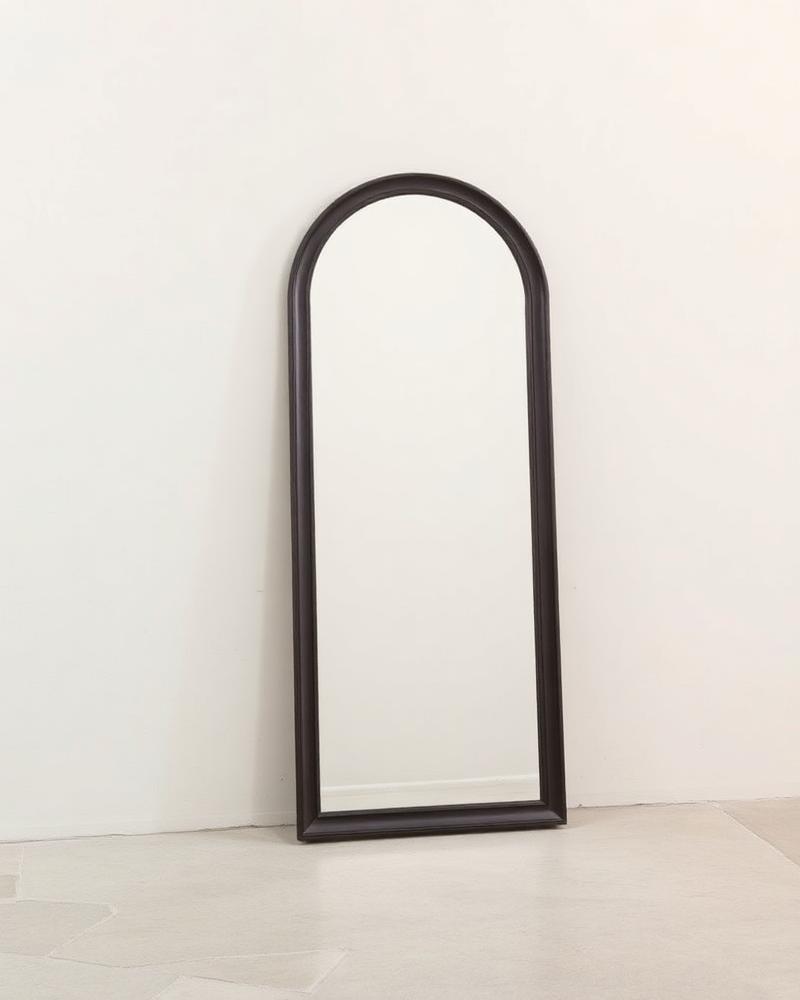
Selene
Oversized Arch Mirror
$1,290
from $108/mo
Dimension Guide
Quick Answer
A mirror should span about two thirds of the furniture beneath it and hang with its centre 57 to 60 inches from the floor. Above a vanity, keep it 2 to 4 inches narrower than the unit; above a console, leave 4 to 6 inches between furniture and frame.
| Type | Typical size | Placement |
|---|---|---|
| Round accent | 24in to 36in diameter | Above a console or basin, centre at 60in |
| Wall mirror | 30in x 40in | Two thirds the width of the furniture below |
| Full length | 24in x 65in | Leaning or wall-mounted, minimum 65in tall |
| Oversized arch | 40in x 80in | Floor-standing against a clear wall |
| Convex | 18in to 30in diameter | Hung high as a focal point |
Start with the furniture, not the wall. Measure the console, credenza, vanity or mantel and multiply by two thirds — that is your target mirror width. A mirror narrower than half the furniture looks stranded; one wider than the furniture makes the piece below look undersized.
Then set the height. Eye level for most people is 57 to 60 inches, and the mirror's centre should land there regardless of ceiling height. Above furniture, leave 4 to 6 inches of wall between the top of the piece and the bottom of the frame — closer and it reads as one clumsy object, further and the pair separates.
Bathrooms: 2 to 4 inches narrower than the vanity, centred on the basin rather than the cabinet if they differ, with sconces at 66 inches and 36 to 40 inches apart. Entryways: a mirror above the console at two thirds width, positioned to reflect the room rather than the front door.
Living rooms: above a mantel, keep the mirror within the mantel's width and leave 4 to 8 inches above the shelf. Bedrooms: a full-length mirror needs at least 65 inches of height to show a full reflection, and 24 inches of width to be useful for dressing. Floor mirrors must be anchored to the wall regardless of weight.
The most common mistake has nothing to do with size: a mirror hung to fill a wall rather than to reflect something worth seeing. Before committing to a position, hold the mirror up and look. A window, a doorway, a piece of art or a lit lamp are all worth reflecting; a blank wall, a ceiling fixture or a television are not.
In narrow corridors, a mirror on the long wall doubles apparent width. In dark rooms, place it perpendicular rather than opposite a window so daylight rakes across the room instead of bouncing straight back out of it.
Interactive Tool
Prefer to work from your own measurements? Use the Mirror Size Calculator for an instant recommendation.