Caldera
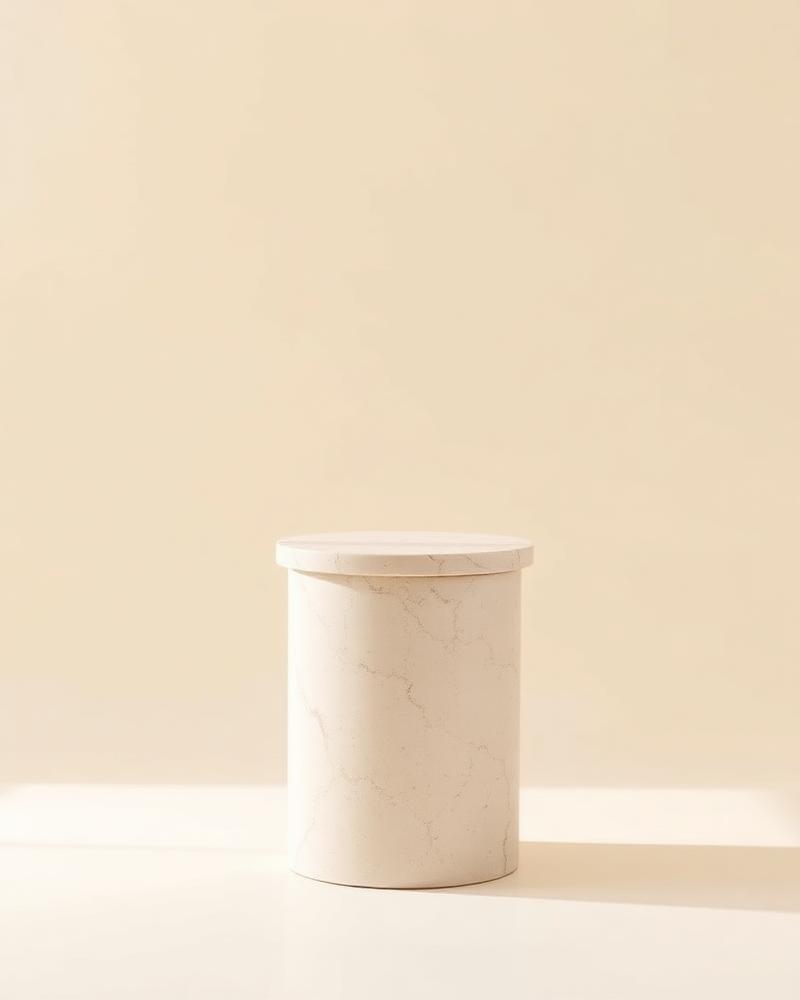
Travertine Side Table
$590
from $49/mo

Material Guide
Travertine is a limestone formed at mineral springs, and its open pores are the fossil record of escaping gas. Rome was built with it — the Colosseum is travertine from Tivoli — and the 1970s rediscovered it as furniture, which is why travertine still reads simultaneously ancient and mid-century.
Vein-cut travertine is sawn along the bedding plane and shows linear striping; cross-cut shows cloudier, more random figuring. Unfilled travertine leaves the pores open for a raw, matte surface; filled and honed travertine has the holes resined for a smoother, more practical top. Colours run from ivory and walnut to silver and noce.
Travertine is warmer and quieter than marble, which makes it easier to live with in quantity. It sits naturally with linen, rattan, oak and off-white plaster and gives a room a sun-bleached calm. Because the stone is monochrome, it is a good choice when the pattern in a room is coming from textiles or art.
Seal travertine on arrival and reseal annually, more often on surfaces that see water. It is calcareous, so acids etch it. Unfilled travertine collects dust in the pores — vacuum with a brush head rather than scrubbing. Clean with pH-neutral soap and warm water only.