Cosmos
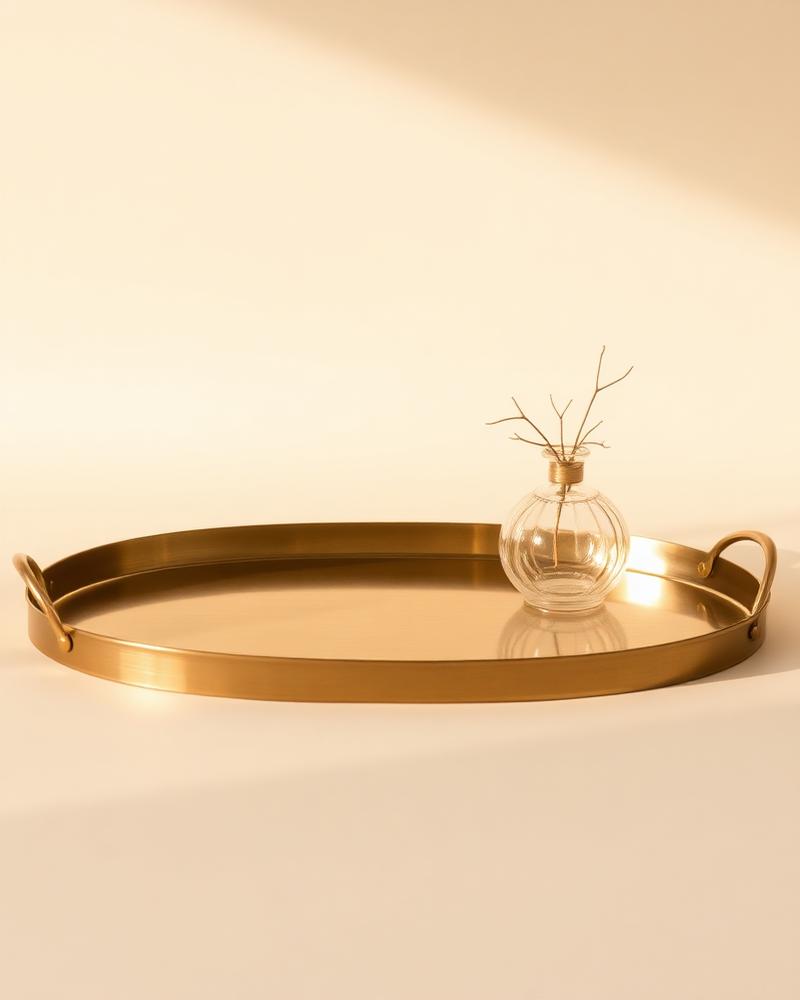
Decorative Brass Tray
$195
from $16/mo
Decorative Objects
A focused edit of decorative trays from the objects collection — selected for proportion, material and finish.
Pieces from the wider collection, shown separately from the edit above.
A well-chosen tray is never merely functional. Our trays occupy that rare territory where utility and composition meet, transforming the everyday act of carrying or corralling into an opportunity for visual refinement. Whether rendered in polished marble, aged brass, or hand-lacquered wood, each piece in our collection has been selected for its ability to anchor a surface with quiet authority.
The history of the tray reaches back centuries, from the elaborate japanned examples of eighteenth-century Europe to the hammered metal work of Arts and Crafts studios. What endures across eras is the form's essential logic: a defined plane, often with a subtle rim, that creates order within the larger landscape of a room. This is furniture at its most elemental, yet the details matter enormously.
Marble trays bring geological weight and cool permanence to a console or ottoman. Carrara, with its soft grey veining, suits traditional and contemporary interiors alike, whilst darker stones such as nero marquina provide dramatic contrast against pale upholstery. Expect these pieces to measure between 12 and 20 inches in diameter or length, substantial enough to ground a composition without dominating it. The natural variation in stone means no two are identical. For guidance on styling these pieces, our thoughts on marble tray styling ideas may prove useful.
Metal trays in brass, bronze, or silver plate carry a different quality altogether. The patina that develops on unlacquered brass tells the story of use and time, whilst polished finishes reflect light and surroundings. Gallery edges, hammered surfaces, and incised details separate the considered from the commonplace. These work particularly well in bar settings or as bedside receptacles for small objects that might otherwise scatter.
Scale determines success. A tray should occupy roughly one-third to one-half of the surface it rests upon, leaving breathing room at the edges. On a coffee table measuring 48 by 24 inches, a rectangular tray of 16 by 24 inches creates pleasing proportion whilst still allowing space for books or a small vessel. Round trays, typically between 14 and 18 inches in diameter, soften the geometry of angular furniture and work beautifully on ottomans. Our coffee table tray styling journal entry explores these relationships in greater depth.
Consider height as well as footprint. A tray with a pronounced rim or feet lifts its contents into clearer view, creating subtle hierarchy among the objects on a table. This vertical dimension, even if only half an inch, makes a material difference to how a composition reads from across a room.
The best trays fade into their role, noticed only when absent. They create invisible boundaries that allow other objects to register more clearly, much as a mat defines a picture. This is especially valuable in rooms where surfaces accumulate the drift of daily life.
Marble requires immediate attention to spills, particularly acidic liquids such as wine or citrus juice, which can etch the surface. Blot rather than wipe, and clean with pH-neutral soap and water. Sealing once or twice yearly helps resist staining, though some professionals prefer to let the stone develop its own patina.
Metal trays benefit from occasional polishing if a bright finish is desired, though many prefer the deepened tones that develop naturally. Lacquered wood needs only a soft cloth and avoidance of standing water. The principles remain constant across materials: respect the substance, intervene gently, allow time to leave its mark.
Interior harmony often rests on such modest gestures. A tray does not announce itself, yet its absence creates a subtle disorder, a sense that objects float unmoored. Our collection reflects this understanding, offering pieces whose refinement lies in proportion, material integrity, and the knowledge that true luxury whispers. For those interested in larger interpretations of this form, our journal piece on tray top coffee table ideas extends these principles to furniture scale. What matters is not the object itself but the clarity it brings to everything around it.