Provence
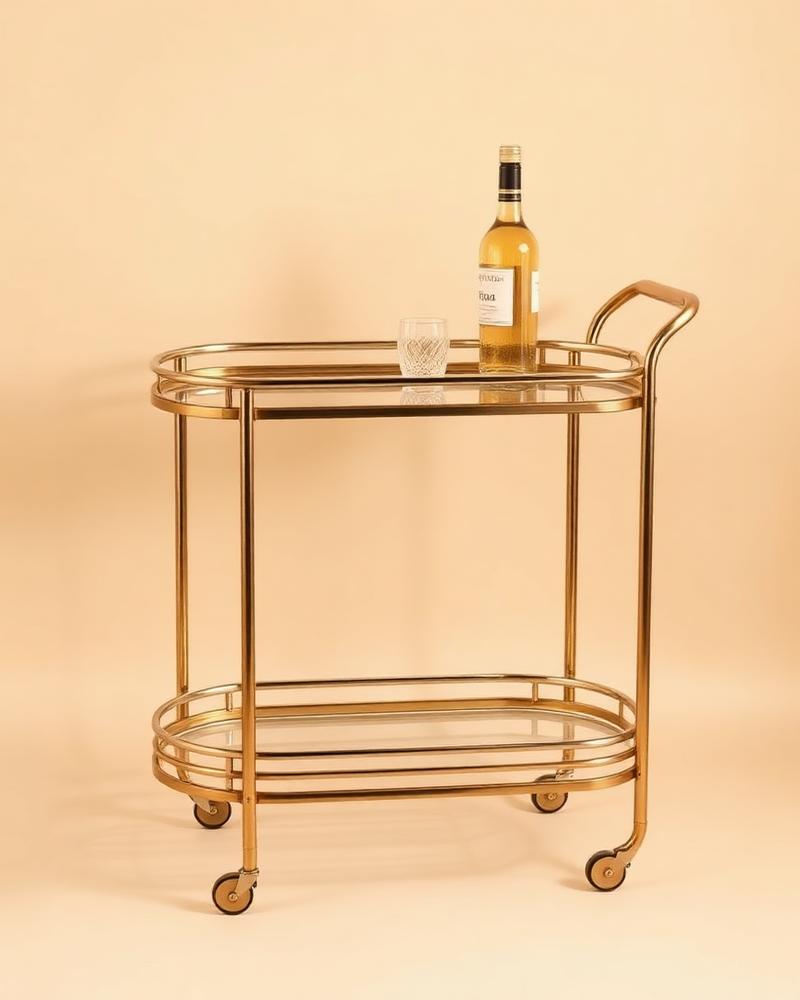
Brass Bar Cart
$780
from $65/mo
Luxury Furniture
A focused edit of bar carts & cabinets from the furniture collection — selected for proportion, material and finish.
Pieces from the wider collection, shown separately from the edit above.
The resurgence of bar carts in contemporary interiors reflects a broader appreciation for pieces that blend function with architectural presence. Unlike fixed cabinetry, a well-chosen cart offers the flexibility to reconfigure a room's social geography whilst providing a dedicated surface for glassware, spirits, and the small rituals of hospitality.
The best examples occupy a middle ground between furniture and sculpture. They anchor a corner of a drawing room or dining area without dominating it, and their portability means they can migrate from library to terrace as the occasion requires. Proportions matter considerably: a cart that feels substantial in a showroom photograph may prove awkward in a room with existing pieces.
Bar carts in our collection privilege materials that age gracefully rather than date quickly. Solid brass frames develop a patina that deepens over months and years, whilst tempered glass shelving maintains transparency without the flimsiness of lesser constructions. Certain designs incorporate marble or travertine surfaces, particularly on lower tiers where the stone's weight lends stability and its cool surface proves practical for chilled bottles.
The joinery reveals much about longevity. Welded brass corners withstand the minor collisions inevitable in daily use far better than threaded connections. Castors should be solid metal rather than plastic-sleeved, and substantial enough that the cart glides rather than judders across timber or stone floors. We favour designs where the wheel mechanisms can be serviced or replaced, a detail that extends useful life considerably.
A bar cart typically measures between 30 and 36 inches in height, aligning roughly with standard console tables and allowing comfortable access to bottles and glassware without stooping. Width varies more dramatically, from compact 24-inch designs suited to smaller flats to generous 40-inch pieces that can anchor a larger room.
Depth deserves particular attention. A shallow cart of 14 to 16 inches can nestle against a wall between windows or beside a doorway without impeding passage, whilst deeper examples of 20 inches or more function almost as mobile side tables, accommodating larger serving pieces or decorative objects alongside the requisite bottles.
Consider these spatial relationships when selecting a cart:
The tendency to overcrowd bar carts undermines their architectural clarity. A disciplined approach serves better: a carefully edited selection of bottles on the upper tier, glassware below, perhaps a single sculptural object or small vessel for garnishes. The negative space between objects matters as much as the objects themselves.
Glassware benefits from grouping by type rather than scattered arrangement. Four to six pieces of a kind create visual coherence without suggesting a commercial establishment. If the cart incorporates a mirrored lower shelf, be mindful that it will reflect and effectively double whatever rests upon it, an optical effect that rewards restraint.
Brass frames require only occasional wiping with a barely damp cloth. Those who prefer the bright finish of new brass may use a dedicated polish, though we find the developing patina preferable. Glass shelves benefit from the same treatment as windows: a solution of water and white vinegar applied with a lint-free cloth leaves no residue.
Marble or stone surfaces should be sealed annually and cleaned only with pH-neutral solutions, never vinegar or citrus-based products. Attend to spills immediately, as spirits with high alcohol content can etch certain stones if left standing.
The appeal of bar carts lies partly in their unfussiness, in the way they accommodate the impromptu as readily as the planned gathering. A piece chosen with attention to materials, scale, and craft will serve for decades, acquiring the subtle marks of use that distinguish the genuinely useful from the merely decorative.