Solstice
Sculptural Floor Lamp
$780
from $65/mo

Designer Lighting
A focused edit of floor lamps from the designer lighting collection — selected for proportion, material and finish.
Pieces from the wider collection, shown separately from the edit above.
A floor lamp is rarely an afterthought in a well-appointed room. It anchors a reading corner, defines a seating arrangement, or provides a vertical counterpoint to low-slung furniture. We select floor lamps that balance sculptural presence with functional light, pieces that work quietly within a broader lighting scheme rather than competing for attention.
The best examples share certain qualities: a stable base, a shade or diffuser that directs light without glare, and proportions that relate comfortably to the furniture around them. Materials matter—turned brass, hand-finished walnut, linen drum shades—because these are objects you live with at eye level, where detail and craft are visible.
A floor lamp typically stands between 58 and 64 inches tall, though arc designs may reach higher. The base should be heavy enough to remain stable without appearing clumsy; eight to twelve pounds is common for mid-sized designs. Position the shade so that the bottom edge sits at roughly 40 inches from the floor when placed beside a sofa or armchair, allowing the light to fall comfortably over a reader's shoulder without shining directly into the eyes.
In a living room, a floor lamp often works best in a corner or beside a chair rather than centred in open space. Our floor lamps living room collection includes designs suited to both intimate reading nooks and larger, more formal arrangements. Consider the lamp's footprint: a tripod base may need 18 inches of clearance, while a slender column requires far less.
We favour natural materials that age gracefully. Solid brass develops a warm patina over time, while blackened or antique finishes offer a quieter presence. Marble and travertine bases provide weight and a connection to classical forms. Turned wood—walnut, oak, ash—brings warmth to minimal interiors without folksy affectation.
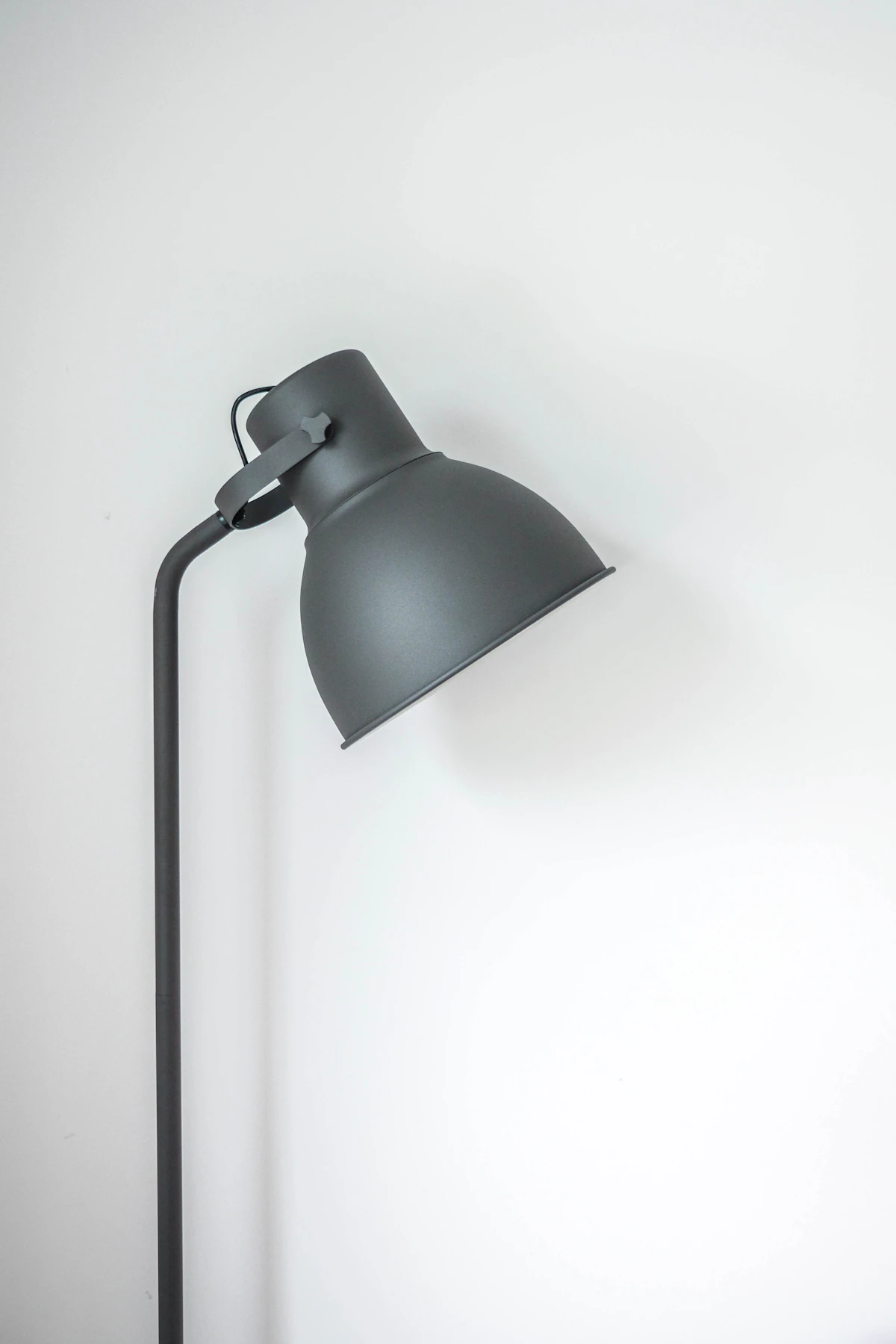
Shades in linen, cotton, or parchment soften the light and integrate easily with upholstery and textiles elsewhere in the room. Painted metal shades, particularly in matte black or aged brass, suit more industrial or mid-century schemes. Our lamp shade guide explores how shade shape and material affect both light quality and visual weight.
Certain archetypes endure because they solve recurring problems well:
Each has its place. An arc lamp might replace a chandelier in a room with low ceilings or where wiring is impractical. A slender column lamp can occupy the narrow space between a chair and a window where a table lamp would be too broad.
Floor lamps work best as part of a layered scheme. They provide mid-level ambient or task light, complementing overhead fixtures and table lamps on consoles or bedside tables. In a living room, you might combine a pendant or chandelier for general illumination, a floor lamp for reading, and a table lamp for accent, creating flexibility for different times of day and activities.
Our floor lamps living room journal entry discusses specific arrangements and how to balance multiple sources without crowding the room. Pendant lights and floor lamps often work in concert, the former defining a dining or central zone while the latter carve out quieter, more intimate areas at the room's edges.
Dust shades regularly with a soft brush or vacuum attachment. Linen and cotton shades can be gently spot-cleaned; avoid soaking, which may cause warping or discolouration. Brass and copper finishes develop patina naturally; if you prefer a brighter surface, use a metal polish sparingly. Marble bases benefit from occasional sealing to resist staining, particularly in high-traffic areas.
Check that bulbs match the fixture's rating—overlighting can damage shades and sockets. LED bulbs in warm colour temperatures between 2700K and 3000K approximate incandescent light without the heat, extending the life of both shade and fixture. Most of our floor lamps accommodate standard E26 bulbs, allowing you to adjust brightness and colour as needed.