Alpina
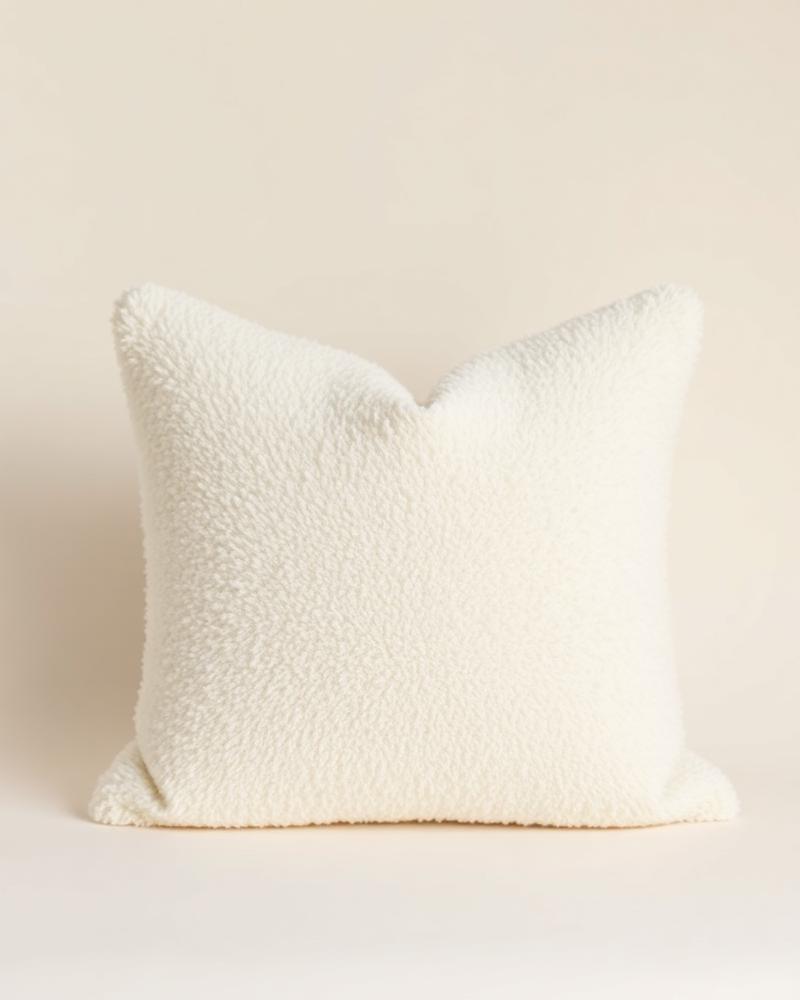
Bouclé Throw Pillow
$120
from $10/mo

Material Guide
Wool has floored and clothed the northern hemisphere for millennia because the fibre is structurally clever: a crimped, scaled protein that traps air, absorbs moisture without feeling wet, resists flame and recovers its shape after compression. Every synthetic rug fibre is an attempt to imitate it.
New Zealand wool is white and takes dye brilliantly; Tibetan and Himalayan wool has longer fibres and a natural lustre; undyed wools in cream, grey and brown avoid dye entirely. Construction matters more than origin: hand-knotted rugs last generations, hand-tufted rugs are more affordable but shed more, and flat weaves and kilims are reversible and low-profile.
Wool is the default for rugs that need to survive real traffic. Layer a smaller patterned wool over a large jute for depth, or use one large wool rug to define a seating zone. Undyed wool throws add texture to leather and velvet without introducing another colour into the scheme.
Expect a new wool rug to shed for several weeks; vacuum without a beater bar until it settles. Rotate annually for even wear, use a good underlay to prevent abrasion, blot spills immediately with cold water, and have larger rugs professionally cleaned every few years rather than shampooed at home.