Atelier
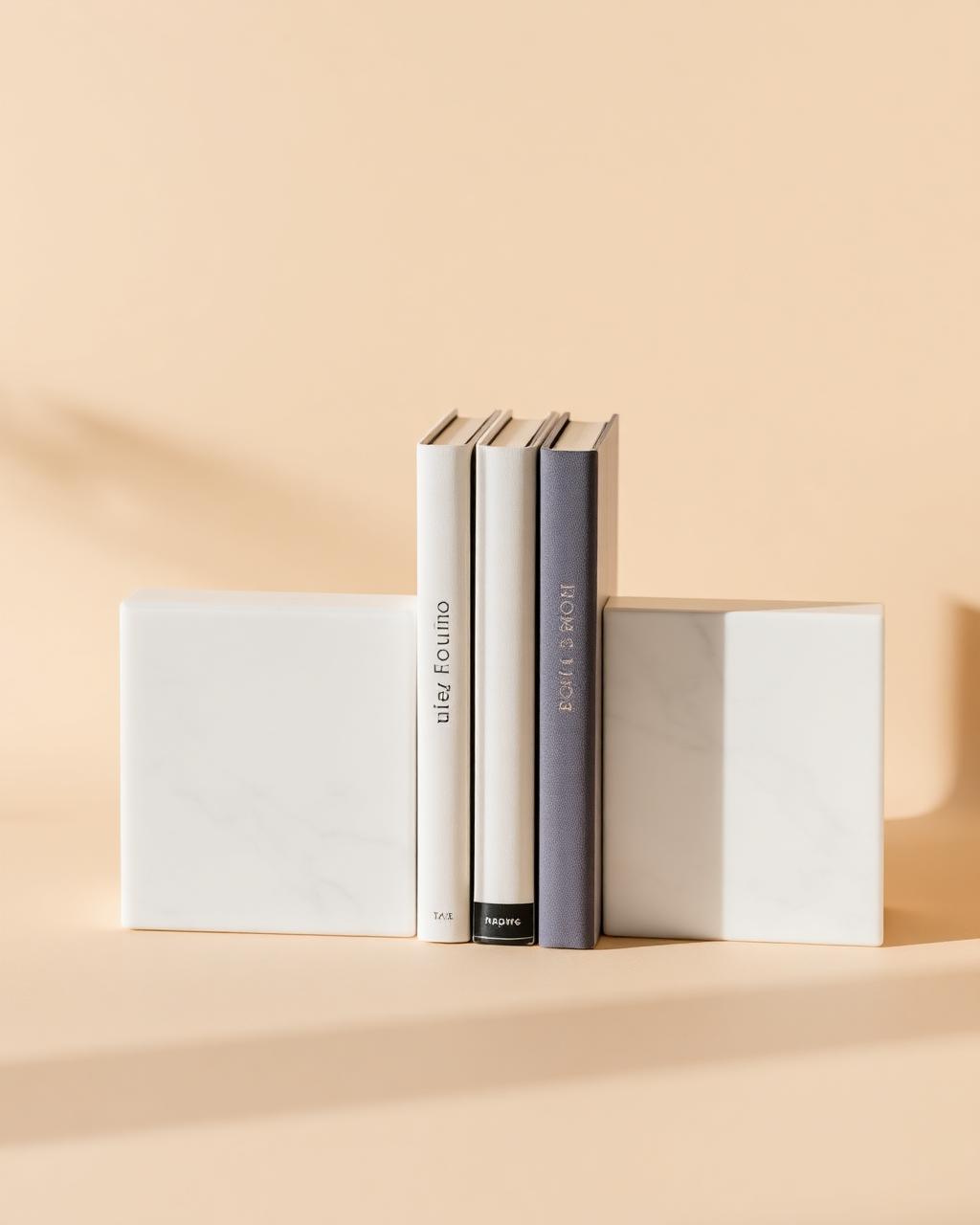
Marble Bookends (pair)
$220
from $18/mo
Dimension Guide
Quick Answer
Standard shelving is 30 to 36 inches wide, 10 to 12 inches deep, with 10 to 12 inches between shelves for books. Keep unsupported spans under 32 inches in timber to prevent sagging, and anchor any unit over 48 inches tall to the wall.
| Contents | Shelf height | Depth |
|---|---|---|
| Paperbacks | 8in to 10in | 8in deep |
| Hardbacks | 10in to 12in | 10in to 12in deep |
| Art & coffee-table books | 14in to 16in | 14in to 16in deep |
| Objects & vessels | 14in to 18in | 12in to 16in deep |
| Records | 13in to 14in | 13in deep |
Books are heavier than furniture design usually admits: a linear foot of hardbacks weighs around 20 to 25 pounds. In solid timber of three quarters of an inch, keep unsupported spans to 30 to 32 inches; in inch-thick stock you can reach 36. Metal-framed or steel-reinforced shelves handle 48 inches and beyond.
If an existing shelf has begun to bow, the fix is a mid-span support or a stiffening batten glued along the front edge — not a heavier load distributed differently. Sagging is cumulative and does not recover.
Standard bookcases run 30 to 36 inches wide and 72 to 84 inches tall. Below 48 inches, a unit reads as a low credenza and works under art or a window; above 84, it becomes architecture and should be built in or scribed to the wall. Depth of 10 to 12 inches suits books; 14 to 16 inches suits objects and turns a bookcase into a display.
In a room where the shelving is meant to disappear, paint it the wall colour and keep the back panel solid. Where it is meant to be furniture, use an open frame in oak, walnut or blackened steel so the wall reads through it.
Fill about two thirds of each shelf and leave the remainder empty. Alternate vertical stacks of books with horizontal stacks used as plinths, and place one object per shelf rather than three. Group books by colour only if you actually find your books that way; by subject is more usable and reads just as calm.
Light shelving from above or from the side rather than relying on room light. A small picture light or an integrated LED strip turns a bookcase into a feature at night, which is when most people are looking at it.